

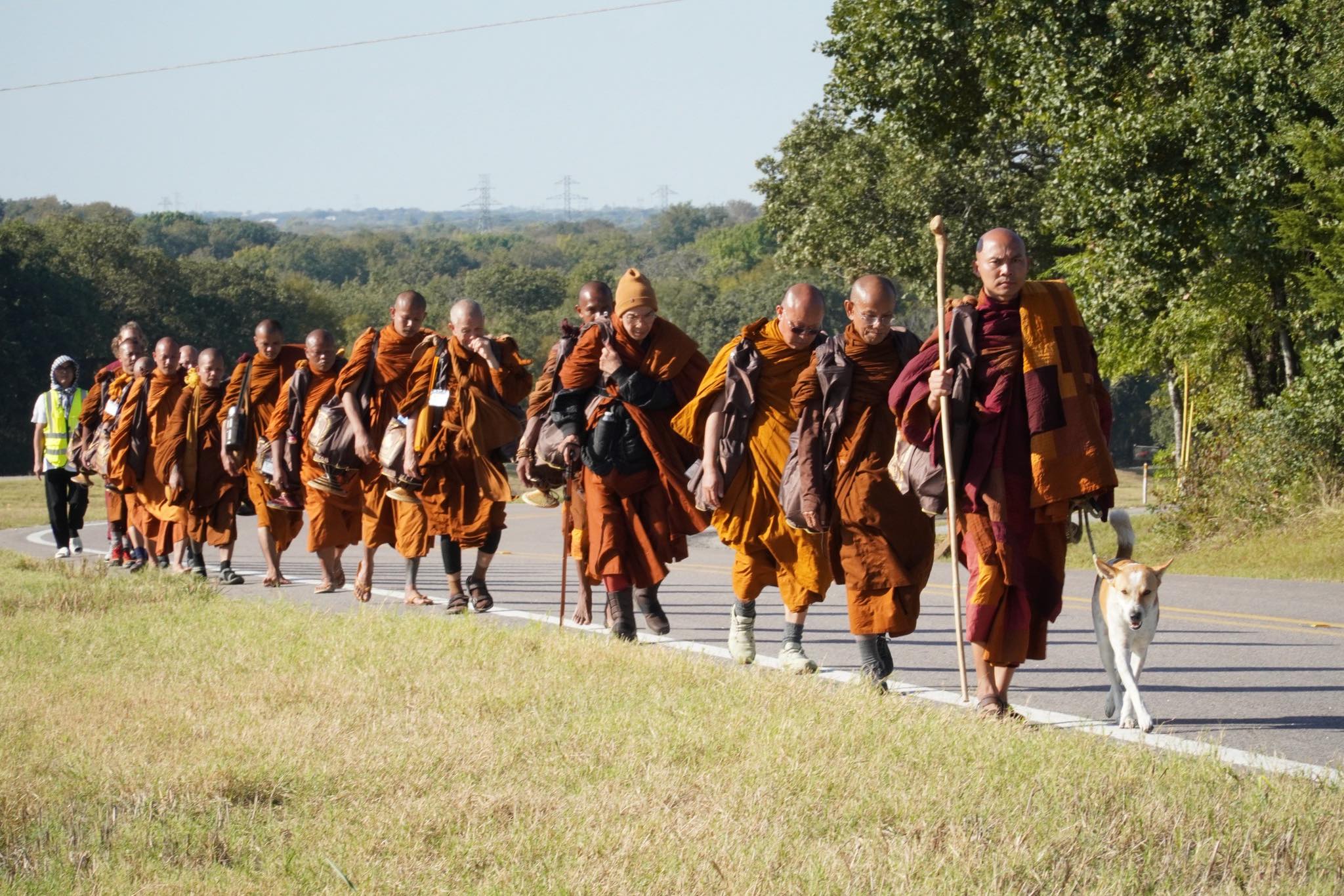
We scroll through headlines of division and crisis until a low-grade despair begins to feel normal. Then, sometimes, the universe offers a gentle correction—a story so pure in its symbolism it stops us mid-scroll and feels like a quiet, perfect parable.
This was the story of Tibetan monks on a walking meditation and Aloka, the stray dog who joined them. She was named for "Light," and she walked every mile by their side.
But why, as book people, does this resonate so deeply?
Because at its heart, this is a story about the very principles that define our love for the written word: unexpected companionship, the power of a shared journey, and the sacred integrity of a narrative.
Here’s how this true tale reads like our favorite books:
1. It’s About the Companion You Didn’t See Coming
The best stories—and bookshops—are places of serendipitous discovery. We walk in looking for one thing and find something else that changes us. Aloka was that unexpected character who entered the monks’ narrative and made the story richer. She reminds us of the book we didn’t know we needed, the one that finds us and insists on being part of our journey. Who is the "Aloka" on your shelf? The unplanned, loyal companion you can't imagine your story without?
The best stories—and bookshops—are places of serendipitous discovery. We walk in looking for one thing and find something else that changes us. Aloka was that unexpected character who entered the monks’ narrative and made the story richer. She reminds us of the book we didn’t know we needed, the one that finds us and insists on being part of our journey. Who is the "Aloka" on your shelf? The unplanned, loyal companion you can't imagine your story without?
2. It Champions the Quiet Narrative Over the Loud Noise
Their pilgrimage was a silent protest against hurry and indifference. In an age of hot takes and digital shouting, their story was told in footsteps, not speeches. This is the power of a good book. It doesn’t scream for your attention; it invites you into its quiet pace. It is a walking meditation for the mind. In our world of endless scrolls, a book asks us to slow down, breathe, and witness a deeper truth.
Their pilgrimage was a silent protest against hurry and indifference. In an age of hot takes and digital shouting, their story was told in footsteps, not speeches. This is the power of a good book. It doesn’t scream for your attention; it invites you into its quiet pace. It is a walking meditation for the mind. In our world of endless scrolls, a book asks us to slow down, breathe, and witness a deeper truth.
3. The Most Powerful Chapter is Often "The Pause"
When Aloka was injured, the monks stopped. They halted their entire pilgrimage to tend to her. “We are a family. We do this together,” they said. This is the narrative twist that defines the whole story. It’s the moment in a great novel where the plot isn’t about moving forward, but about standing still for what’s right. It asks: What is a journey for, if not to honor the bonds made along the way? For us, it mirrors the moment a book is so profound we must close it and just feel. Or the way a local bookshop is not just a business, but a community that pauses—a place that holds space for connection, recommendation, and solace, refusing to leave any reader behind.
When Aloka was injured, the monks stopped. They halted their entire pilgrimage to tend to her. “We are a family. We do this together,” they said. This is the narrative twist that defines the whole story. It’s the moment in a great novel where the plot isn’t about moving forward, but about standing still for what’s right. It asks: What is a journey for, if not to honor the bonds made along the way? For us, it mirrors the moment a book is so profound we must close it and just feel. Or the way a local bookshop is not just a business, but a community that pauses—a place that holds space for connection, recommendation, and solace, refusing to leave any reader behind.
This isn't about religion. It's a lesson in humanity—and a perfect metaphor for the world of books.
A book is a family you choose. A bookshop or a library is a chosen circle of unwavering responsibility to stories and to each other. It’s a place where the vulnerable, the quirky, the quiet, and the monumental all sit side-by-side on the shelf, welcomed equally.
The monks and Aloka walked a physical path, but we walk a path of pages. Their story reminds us that the most important journeys are shared.
So, let's keep our hearts and our shelves open to the unexpected companions. Let's honor the pauses for reflection. And let's remember that in a fragmented world, the simple act of sharing a story, of recommending a book, of saying "You might love this," is our way of whispering, "We do this together."
So, let's keep our hearts and our shelves open to the unexpected companions. Let's honor the pauses for reflection. And let's remember that in a fragmented world, the simple act of sharing a story, of recommending a book, of saying "You might love this," is our way of whispering, "We do this together."