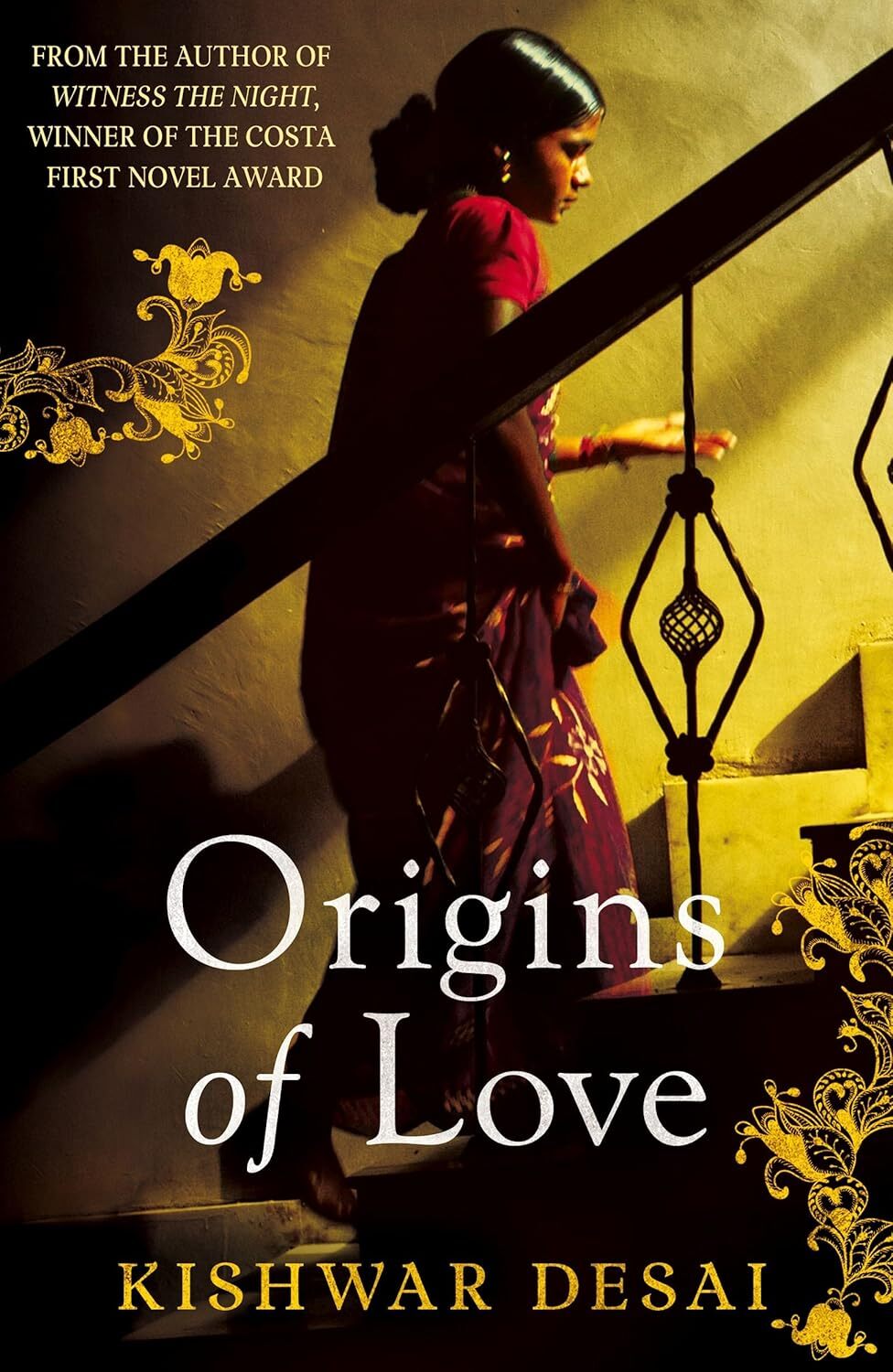


In Kishwar Desai’s Origins of Love, the traditional boundaries of the domestic thriller are dismantled to make room for a harrowing exploration of the global surrogacy industry.
Following the success of her debut, Witness the Night, Desai brings back the indomitable social worker Simran Singh, an unconventional protagonist whose cynicism is matched only by her relentless pursuit of justice.
The narrative begins with a crisis that is both a legal nightmare and a moral tragedy: a baby is abandoned in an illegal Delhi clinic, rejected by the British couple who commissioned its birth. This catalyst sends Simran on a journey through the "baby farms" of India, revealing a world where human life is treated with the cold efficiency of a manufacturing line.
The strength of Desai’s prose lies in her refusal to provide easy answers or clear-cut villains. Instead, she maps the "Grey Market" of human emotion, where the desperate longing of affluent, infertile couples intersects with the crushing poverty of Indian women who view their wombs as their only viable economic resource.
By shifting the perspective between the hopeful but often oblivious intended parents in London and the marginalized surrogates in rural India, Desai highlights a stark global inequality. She forces the reader to confront the reality of "reproductive tourism," where the miracle of birth is shadowed by the mechanics of a contract that treats a child as a commodity subject to quality control.
Throughout the novel, the character of Simran Singh serves as the reader’s moral compass, navigating a landscape of unregulated fertility clinics and corrupt middlemen. Her whiskey-drinking, sharp-tongued demeanor provides a necessary grit to a story that could otherwise lapse into melodrama.
Through Simran’s eyes, the book examines the philosophical definition of motherhood, questioning whether the bond is forged through genetics, the physical act of gestation, or the legal intent to parent. Desai’s writing is unflinching, capturing the clinical coldness of the industry while maintaining a deep, vibrating empathy for the women caught in its gears.
Ultimately, Origins of Love is a rare example of a social thriller that manages to be both a page-turner and a profound cultural critique. It does not merely seek to entertain; it seeks to haunt. By the final pages, the reader is left with the unsettling realization that while science has mastered the "how" of creating life, society is still struggling with the "why" and the "at what cost."
Desai has crafted a narrative that is as intellectually demanding as it is emotionally resonant, cementing her place as a vital voice in contemporary fiction who isn't afraid to pull back the curtain on the most uncomfortable corners of our modern world.
We find striking parallels between Origins of Love and Kazuo Ishiguro’s Never Let Me Go, where we find how both authors utilize the "social thriller" to critique the commodification of the human body. While Desai’s work is grounded in the contemporary, lived reality of the global surrogacy trade, Ishiguro’s novel functions as a dystopian allegory.
Both, however, center on the creation of life for the sole purpose of serving another's needs. In Desai’s India, the surrogate’s body is a temporary vessel leased through economic necessity; in Ishiguro’s Hailsham, the "clones" are biological reserves meant for organ harvesting. Both narratives force the reader to confront the "out of sight, out of mind" ethics that allow privileged societies to flourish at the expense of a hidden, exploited class.
Desai and Ishiguro both emphasize the psychological toll on those deemed "expendable." Just as the students in Never Let Me Go struggle to prove they have souls through their art, the surrogates in Origins of Love navigate a system that attempts to strip them of their maternal identity, reducing them to biological laborers. The central tension in both works lies in the dehumanization required to make these industries palatable.
Desai uses the gritty, investigative lens of Simran Singh to expose the legal and medical loopholes of the present, whereas Ishiguro uses a melancholic, retrospective prose to show a future where the moral battle has already been lost. Together, these novels serve as a dual warning: one about the world we are currently building and the other about the world we might inherit.